
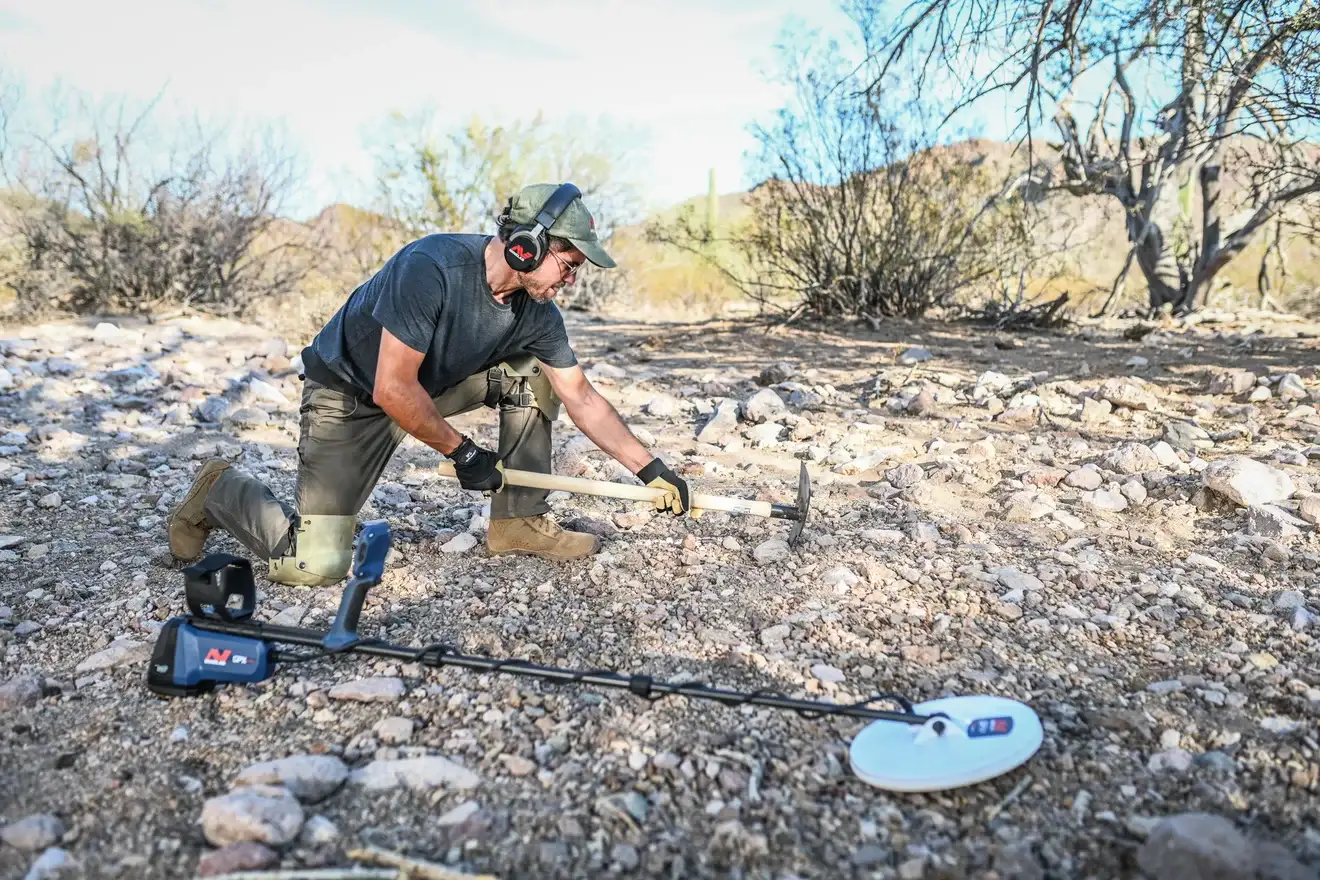
Gold detecting is advancing fast: new technologies, better user-interfaces, improved coils, more effective ground handling. If you’re considering investing in a top-tier detector, here’s a comparison of leading models, with what makes them stand out, where they may lag, and which type of user each is best suited for.
Key Features to Consider
Before looking at specific detectors, these are the important attributes that distinguish the latest models:
- Depth (how deep a detector can find nuggets)
- Sensitivity to small gold particles
- Ability to handle mineralised ground
- Coil quality and size
- Waterproofing / durability
- Additional features: GPS & mapping, wireless audio, noise cancellation, battery life, weight & ergonomics
Leading Models & How They Compare
Minelab GPZ 7000
What makes it special:
- Uses ZVT (Zero Voltage Transmission) technology, which delivers up to ~40% more depth compared to the older GPX series.
- Comes equipped with a large “Super-D” 14″×13″ coil that’s waterproof down to 1 m (3 ft).
- Excellent ground balance (automatic and manual), strong immunity to electrical and atmospheric noise (256 noise cancel channels) for stable performance even in highly mineralised soils.
- Features like built-in GPS & mapping (with waypoints), wireless audio options, multiple “gold modes” (General, High Yield, Extra Deep) to adjust for varying detecting conditions.
Trade-offs / downsides:
- Price is very high: this is premium gear. So the investment is substantial.
- Weight: including coil and battery, around 3.32 kg (~7.3 lb), which can become tiring over long detecting sessions.
- Size: the large coil is great for depth and coverage, but may be less nimble in tight or rocky terrain.
Best for: Serious prospectors who hunt deep, want to go after large or “retirement-nuggets,” operate in heavily mineralised soil or wet/waterway areas, and who need top performance over price. Investing in a high-quality gold nuggets detector improves your chances of finding gold quickly.
Other Noteworthy Models
While GPZ 7000 is the flagship in many ways, there are other detectors that are more suitable for specific situations or where budget & weight are more important. (Note: as of latest verifiable data, detailed spec sheets for other new models are less complete or region-specific. But user feedback and forums give us useful comparisons.)
- XP Deus II
User reports frequently highlight its versatility: multi-frequency operation, lightweight, good discrimination/control over trash metals, and strong performance in varied soils. For many, it offers a balance between high performance and more manageable cost/weight. Redditors say it “crushes it” especially in coin/gold mixed detecting and is a frequent upgrade from mid-level machines. - Other high-frequency VLF detectors (e.g. models specialized for small gold flakes) are often more affordable, lighter, and more nimble but typically sacrifice some depth and may struggle more in mineralised or wet ground.
- Waterproof PI or hybrid models are valuable where detecting in streams, creek beds, or wet terrain is common. Being able to submerge coils or use detectors safely near water opens up more detecting areas.
Side-by-Side Comparison (Examples)
Here’s a more direct comparison of features for some of the top detectors versus trade-offs, to help you choose what matches your priorities:
| Model | Depth / Penetration | Sensitivity to Small Gold | Handling Mineralised Soil | Water / Durability | Weight & Ergonomics | Price / Value |
| GPZ 7000 | Very high (thanks to ZVT) | Excellent (large coil plus good noise cancellation) | Outstanding (automatic & manual ground balance, 256 noise cancel channels) | Waterproof coil to 1 m, weather-resistant overall | Heavy, large coil; not as nimble in tight terrain | High cost; excellent value if you need top performance |
| XP Deus II | Moderate-High (depends on coil & settings) | Very good | Good, especially with adjustments and discrimination | Many coil and accessory options for wetter areas; lighter overall | Much lighter, more flexible; more portable | Better value for those who want strong features without the flagship price |
| High Frequency VLF (small gold specialist) | Less depth vs PI/ZVT | Very good for small particles | May struggle in heavily mineralised soil unless top-tier unit | Coil durability matters; waterproofing often limited | Lightweight; easy to carry long sessions | More affordable; good as second detector or primary for small/surface gold |
What to Prioritize Based on Your Situation
Which detector “wins” really depends on your detecting environment and goals. Here are some scenarios and what you should prioritize in each:
- Detecting in heavy mineral soil or old gold fields with deeply buried nuggets → Pick depth, strong ground balance, noise immunity. GPZ 7000 is excellent here.
- Detecting small gold flakes near streams or in wet ground → Prioritize waterproof coils, sensitivity to small gold, lighter weight, easier handling. High-frequency VLFs or midrange units may suffice.
- Traveling, hiking, or rough terrain → Weight and coil size become more important; a lighter detector with flexible coil swapping and solid durability is better than having “maximum depth” that you can’t manage in the field.
- Budget constraints → You may sacrifice absolute depth or top-end electronics, but still get very usable detectors with good performance if you choose models with proven brand reputation and useful feature sets (good frequencies, decent coils, acceptable ground balancing).
Summary
- The Minelab GPZ 7000 is currently one of the highest performance detectors for serious prospectors, delivering superior depth, strong handling of mineralised ground, and robust features. If your budget allows and your detecting environment demands it, it’s hard to beat.
- For many users, detectors like the XP Deus II (and others in its class) offer a better balance: strong performance, more manageable cost & weight, enough features for most gold hunting situations.
- If your main target is small gold near the surface, or you often work in wet or creek-bed conditions, a detector optimized for sensitivity and waterproofing may give more “useful finds” per effort than a detector designed mainly for extreme depth.
Summary for Decision-Makers
Here’s a compact decision-guide:
- Want ultimate depth / large gold in deep or mineralised ground → Go with a premium PI or ZVT machine (e.g. GPZ 7000).
- Want versatility & lighter weight with strong performance for both gold & other finds → Look at multi-frequency or high-end VLF machines.
- Want small gold flakes & wet ground capability → Prioritize small waterproof coils, high frequency, and good signal stability.
- Want to balance budget & performance → Decide which features are must-haves (depth? coil size? waterproofing?) and pick the detector that gives the best in those, rather than all features.
